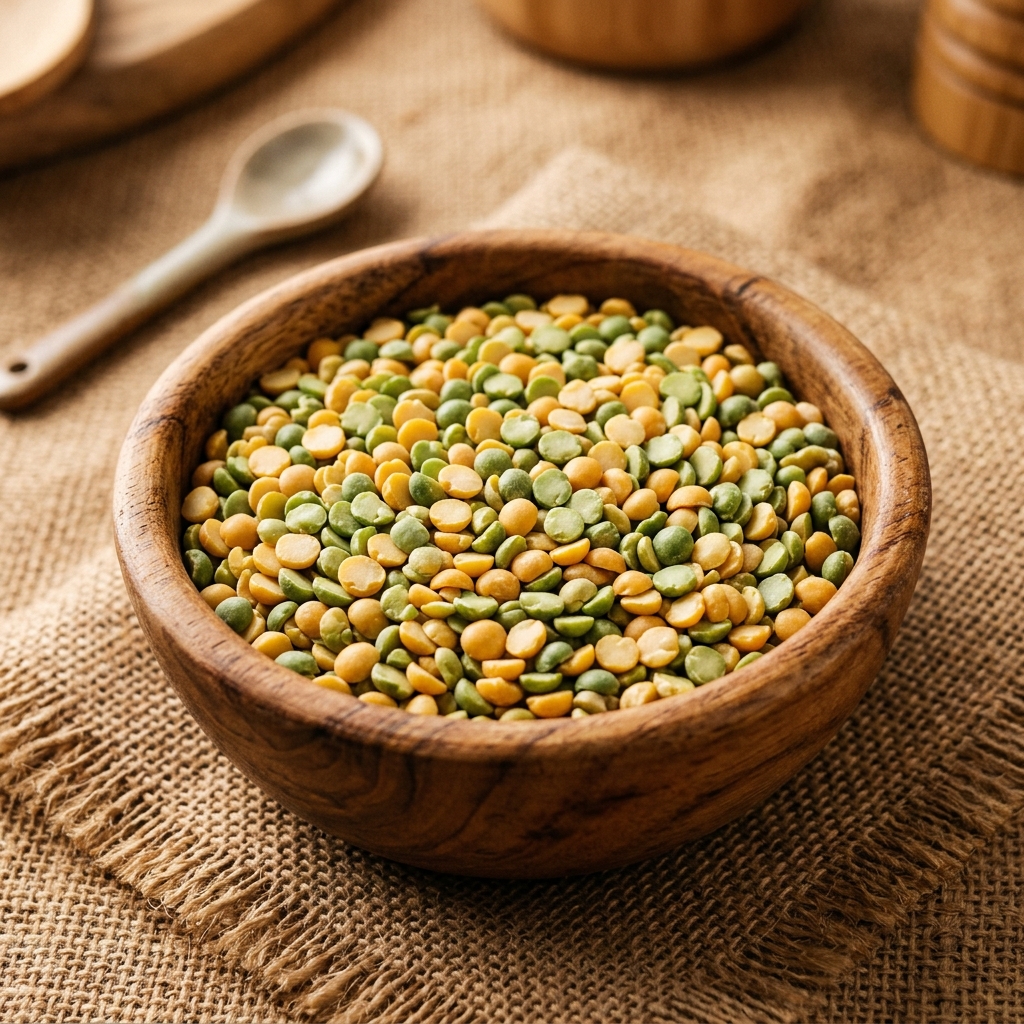
Legumes (peas, lentils, chickpeas) are biologically unique. Unlike most other crops that require synthetic nitrogen fertilizers, legumes have a symbiotic relationship with soil bacteria (rhizobia) in their root nodules. These bacteria capture nitrogen gas directly from the atmosphere and convert it into plant-available nutrients.
This natural fertilization process enriches the soil, significantly reduces the carbon emissions associated with chemical fertilizer production, and provides a nutrient-dense foundation for subsequent cereal crop rotations on Saskatchewan family farms.
Promoting smart agricultural methods to deliver clean plant proteins while protecting Saskatchewan's natural resources.
Dry legumes require up to 10 times less water than livestock proteins and significantly less water than other crops like rice or nuts, thriving in semi-arid plains.
Our partnering growers practice direct-seeding, leaving crop residue in fields to prevent topsoil erosion, save soil moisture, and trap carbon in the ground.
We optimize rail-car packaging densities to reduce fuel consumption during crop hauling from central Saskatchewan collection points to global container vessels.